The ketogenic diet has surged in popularity across the globe, from the fitness hubs of New York and London to the bustling cities of Mumbai and Karachi. Promising rapid weight loss, mental clarity, and sustained energy, it’s a powerful metabolic tool. Yet, the #1 reason people fail on keto isn’t a lack of willpower—it’s improper macronutrient balance. Simply eating “low carb” is not enough. To successfully enter and maintain ketosis—the fat-burning metabolic state that unlocks these benefits—you must hit a precise, personalized daily ratio of fats, proteins, and carbohydrates. This is where a reliable keto macro calculator becomes your most crucial tool.
This ultimate guide is designed for a global audience, providing clear, actionable steps for readers in Tier-1 countries, Pakistan, and India. You will learn exactly how to use keto macros calculator for weight loss and energy, master the critical distinction between net carbs vs total carbs, and determine your own perfect keto macro ratio for a sustainable, effective ketogenic lifestyle tailored to your regional food landscape.
The Science Behind Keto: Why Macros Matter for Ketosis
At its core, the ketogenic diet is a metabolic switcheroo. Your body’s default fuel source is glucose, derived primarily from carbohydrates. By drastically reducing carb intake, you deplete glucose reserves. This metabolic shift forces your liver to convert stored and dietary fat into molecules called ketones, which then become the primary fuel for your brain and body. This state is ketosis. Achieving it isn’t about mere calorie restriction; it’s about strategically manipulating your macronutrient breakdown percentage to trigger this specific biological process. Precision is non-negotiable.
What is Ketosis and How Do You Achieve It?
Ketosis is a natural metabolic state characterized by elevated levels of ketone bodies in the blood (typically above 0.5 mmol/L). To induce it reliably, you must adhere to three pillars:
- Severely Limit Carbohydrates: This is the non-negotiable trigger. Most people need to consume fewer than 20-50 grams of net carbs per day to enter ketosis.
- Consume Adequate Protein: Enough to preserve and repair lean muscle mass but not so much that excess protein is converted into glucose through a process called gluconeogenesis, which can disrupt ketosis.
- Eat Sufficient Fat: With carbs off the table, dietary fat becomes your main energy source. It also provides essential fatty acids and profound satiety, making the diet sustainable.
Straying too far in any macronutrient direction can halt progress. Too many carbs will prevent ketosis entirely. Excessive protein can mimic the effect of carbs. Too little fat leaves you hungry, fatigued, and likely to quit. This delicate balance is why a keto calculator for beginners is essential—it removes the guesswork.
The Importance of Net Carbs in Global Food Systems
This is the most critical concept for keto success worldwide. When you read a nutrition label in a US supermarket, a UK Tesco, or on a packaged food in India or Pakistan, you’ll see “Total Carbohydrates.” For keto, the figure that matters is Net Carbs.
- The Universal Formula: Net Carbs = Total Carbohydrates – Dietary Fiber – Sugar Alcohols (e.g., erythritol, xylitol).
- Why it Matters: Dietary fiber and certain sugar alcohols are not digested and absorbed by the body. They do not significantly impact blood sugar or insulin levels and therefore do not count against your strict daily carb limit. For example, 100g of cauliflower has about 5g of total carbs but 3g of fiber, resulting in only 2g net carbs. Always calculate using net carbs for accuracy, regardless of your location.
Step-by-Step: Calculating Your Personalized Keto Macros
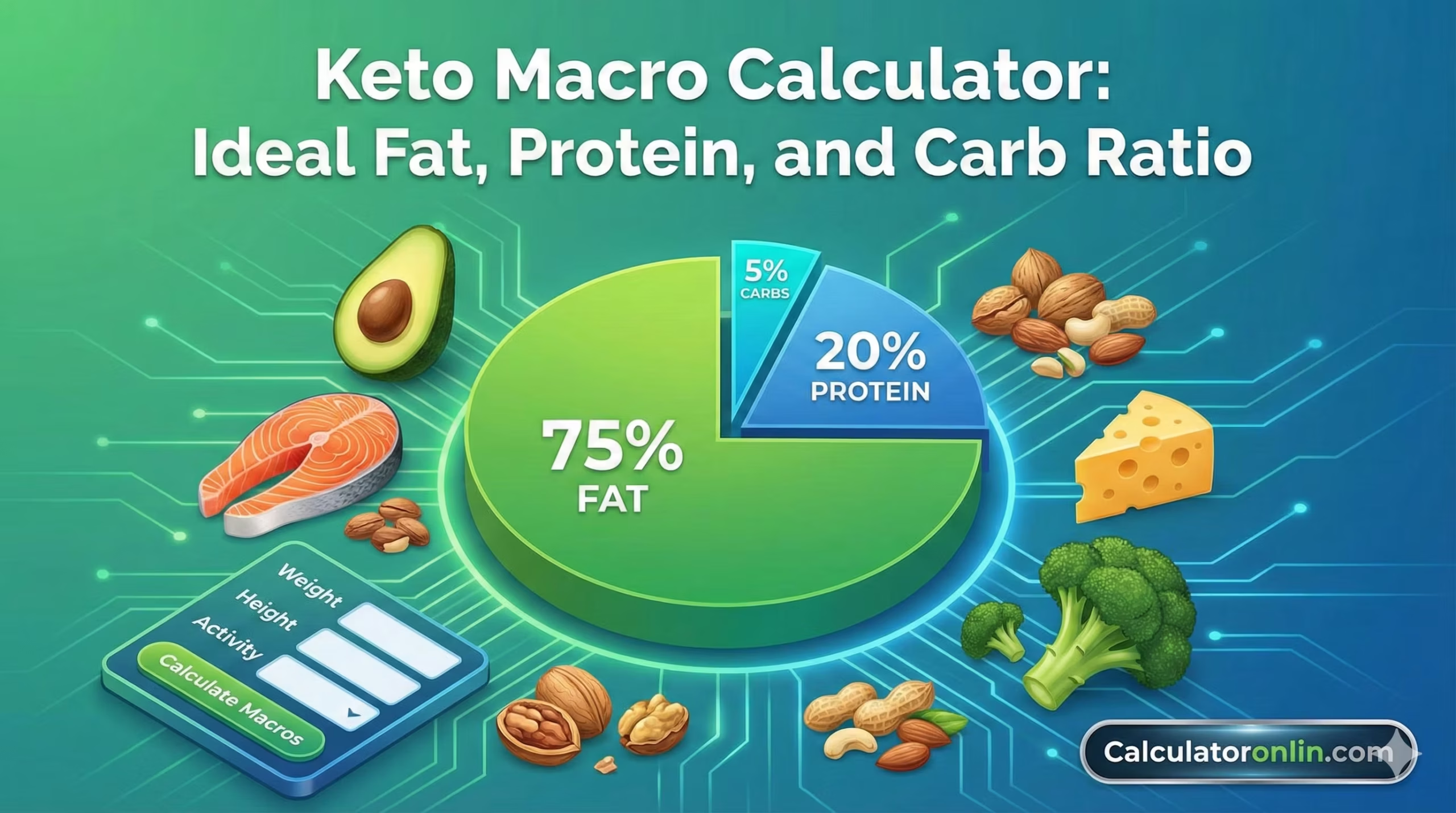
Forget generic ratios like “70% fat, 25% protein, 5% carbs.” Your macros should be as unique as your fingerprint, based on your body, goals, activity level, and regional dietary habits. Here is the manual formula, which mirrors the logic of a sophisticated keto macro calculator.
Determining Your Calorie Goal (Link to Calorie Calculator)
Your first step is establishing your daily calorie target, whether for weight loss, maintenance, or muscle gain. You can use our dedicated Calorie Calculator to find your Total Daily Energy Expenditure (TDEE) based on your age, gender, height, weight, and activity level, and then set a suitable deficit (typically 10-20% for weight loss).
Setting the Protein Floor: Protecting Lean Muscle Mass
Protein is a goal, not a limit. You should aim to hit this number daily to prevent muscle loss.
- Sedentary: 0.6 – 0.8g of protein per pound of lean body mass.
- Moderately Active / Athletes: 0.8 – 1.0g per pound.
- Calculate: If you weigh 70 kg (~154 lbs) with an estimated 25% body fat, your lean mass is ~52 kg (~115 lbs). If sedentary, aim for 115lbs * 0.7g = ~80g of protein daily.
The Carb Ceiling: Staying Under 20g Net Carbs
For most people, especially beginners, staying at or below 20 grams of net carbs is a surefire way to enter and maintain ketosis. This is a strict limit, not a goal. Use your carb allowance on nutrient-dense, fibrous vegetables.
Filling the Rest with Fat: The Fuel Source
Once your calorie goal, protein grams, and carb grams are set, fat fills the remaining energy budget.
- Calculate calories from protein and carbs.
- Protein: 80g * 4 calories/g = 320 calories.
- Carbs: 20g * 4 calories/g = 80 calories.
- Total so far: 400 calories.
- Subtract from your daily calorie goal. For a 1500-calorie target: 1500 – 400 = 1100 calories left for fat.
- Convert fat calories to grams: 1100 calories / 9 calories per gram = ~122g of fat.
Your Final Macros: 1500 Calories | 122g Fat | 80g Protein | 20g Net Carbs. This is your personalized ketogenic diet macro breakdown percentage.
Using the CalculatorOnline Health Tool for Precision
While the manual method is educational, it’s complex and prone to error. A dedicated online Keto Macro Calculator automates this perfectly. Imagine a tool on CalculatorOnline where you input your details (age, gender, height, weight, body fat estimate, activity level, and goal). The tool instantly provides your personalized daily calorie target and gram/percentage breakdown for fat, protein, and net carbs, adjusting perfectly for your goals.
Example Macro Breakdowns: A Global Perspective
- For a 40-Year-Old US/UK Male (Sedentary, Weight Loss): The tool might output: 1850 Calories | 144g Fat (70%) | 116g Protein (25%) | 23g Net Carbs (5%).
- For a 30-Year-Old Indian Female (Moderately Active, Weight Loss): Accounting for generally smaller average frames, an output might be: 1450 Calories | 110g Fat (68%) | 75g Protein (21%) | 20g Net Carbs (6%).
- For a 35-Year-Old Pakistani Male (Active, Maintenance): An output could be: 2200 Calories | 180g Fat (73%) | 110g Protein (20%) | 25g Net Carbs (5%).
The tool provides the starting blueprint. You then adapt the food sources to your local cuisine.
Adjusting Macros for Activity Level (Link to Fitness Calculator)
Your activity level is a major variable. On heavy workout days, you might need to slightly increase protein or even carbs. Our Fitness Calculator can help you fine-tune your activity multiplier, ensuring your calorie and macro goals support your energy expenditure.
Global Keto Food Swaps and Meal Planning
Knowing your numbers is half the battle; applying them with locally available foods is the other. Here’s how to make keto work in your region.
Common Keto-Friendly Foods: A Regional Guide
US/UK Supermarkets:
- Proteins: Beef, chicken, salmon, eggs, bacon (check for added sugar).
- Fats: Avocado oil, olive oil, butter, cheese, heavy cream, avocados.
- Low-Carb Veggies: Spinach, broccoli, cauliflower, zucchini, asparagus.
- Swaps: Cauliflower rice, zucchini noodles, lettuce-wrap burgers.
Indian Kitchens:
- Proteins: Paneer (cottage cheese), chicken, fish, eggs, Greek yogurt (strained, “hung curd”).
- Fats: Ghee, coconut oil, mustard oil, full-fat dairy, nuts.
- Low-Carb Veggies: Bhindi (okra), baingan (eggplant), phool gobi (cauliflower), hari mirch (green chillies), leafy saags like palak (spinach).
- Swaps: Gobi (cauliflower) rice instead of regular rice. Use cabbage or lettuce as roti/wrap substitutes. Sprouted moong in strict moderation (watch carbs).
Pakistani Kitchens:
- Proteins: Beef, chicken, fish, eggs, paneer, keema (minced meat).
- Fats: Desi ghee, olive oil, butter, full-fat dairy, nuts and seeds.
- Low-Carb Veggies: Tori (ridge gourd), lauki (bottle gourd), karela (bitter gourd), shimla mirch (capsicum/bell peppers), cauliflower, spinach.
- Swaps: Use cauliflower or cabbage to make a “qeema” base. Enjoy raita (yogurt with cucumbers/mint) as a side. Be cautious with lentils (daal)—they are higher in carbs.
Dealing with the ‘Keto Flu’ and Electrolyte Management
As you deplete carbs, your body flushes out water and electrolytes (sodium, potassium, magnesium). This can cause “keto flu”: headaches, fatigue, cramps, and irritability.
- Global Solution: Proactively supplement.
- Sodium: Add more salt to food. Drink homemade broth/stock (shorba in South Asia).
- Potassium: Eat avocados, spinach, mushrooms. In India/Pak, coconut water in very small quantities (approx. 100ml) can help, but monitor carbs.
- Magnesium: Consider a supplement like magnesium citrate, or eat pumpkin seeds, almonds.
By using the principles outlined here and leveraging the precision of a keto macro calculator, you move from guessing to knowing. You can confidently construct a meal plan using local ingredients that hits your perfect macro ratio, paving a clear, sustainable, and culturally-relevant path to your health and weight loss goals with the ketogenic diet.
Internal Links: Start with our Calorie Calculator to find your target and explore our Fitness Calculator for activity adjustments.
External References: Information aligned with nutritional research on ketogenic diets from sources like the Journal of Nutrition and Metabolism and guidelines on protein requirements from global health organizations.