Juggling multiple debts while watching minimum payments drain your paycheck? You’re trapped in a cycle where scattered payments create the illusion of progress without actual freedom.
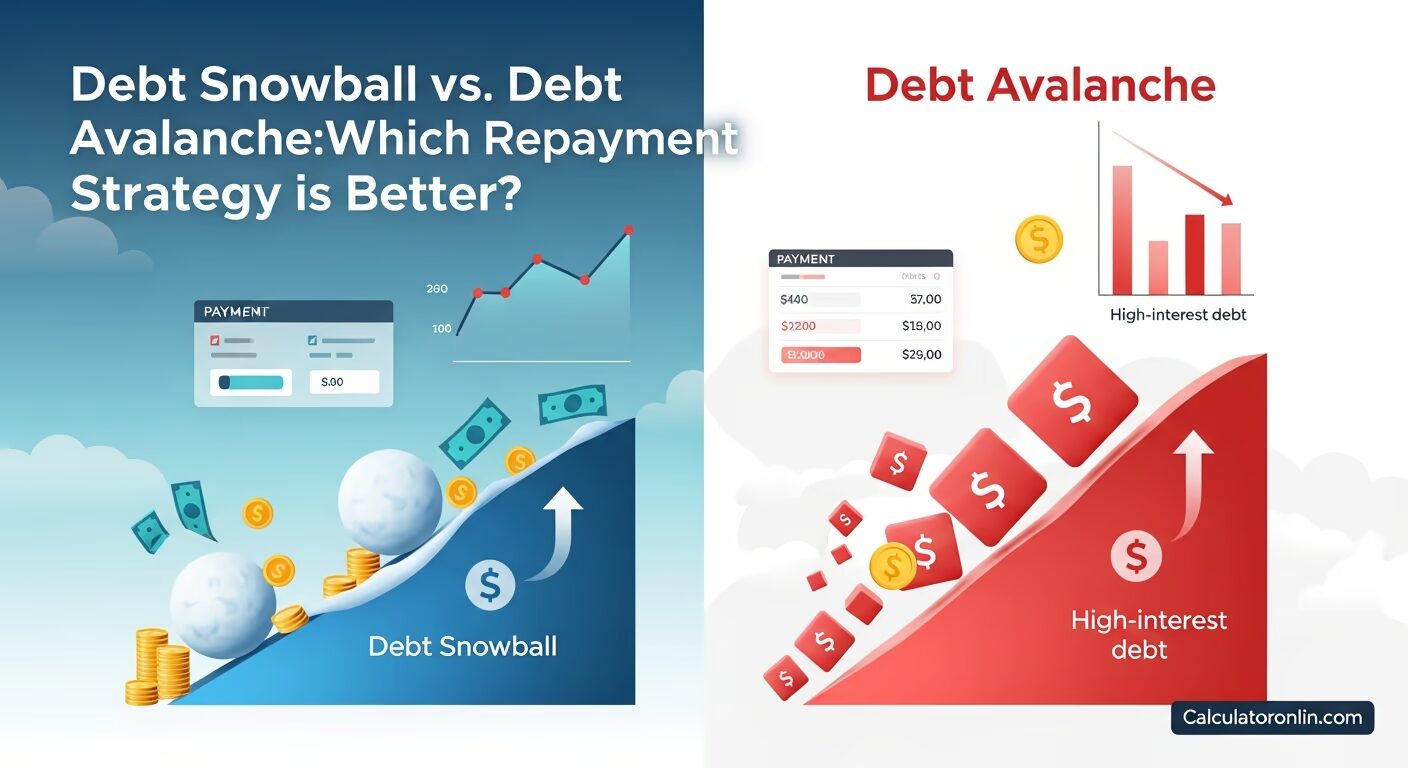
Two battle-tested debt repayment strategies can break this cycle: the debt snowball and debt avalanche methods. Each approach attacks debt differently–the snowball method builds momentum by eliminating your smallest balances first, while the avalanche strategy saves the most money by targeting your highest interest rates. A debt repayment calculator reveals exactly how each method impacts your specific situation, but your success depends on choosing the approach that matches your motivation style.
Understanding which strategy aligns with your personality and financial goals determines whether you’ll stay committed long enough to become debt-free.
Main Takeaways
- Psychology Trumps Math: The debt snowball builds unstoppable momentum through quick wins by targeting smallest balances first, while the debt avalanche maximizes your savings by eliminating highest interest rates first.
- Consistency Creates Success: Your commitment to sticking with your chosen plan matters far more than selecting the theoretically perfect method–both strategies eliminate debt when you apply them consistently.
- Personal Motivation Drives Results: Choose based on what keeps you motivated–whether you need emotional momentum from visible progress or prefer mathematically efficient interest savings to fuel your long-term commitment.
Understanding the Debt Snowball Method
Every month, you face the same overwhelming question: which debt deserves your extra payment? This paralysis keeps millions trapped while their balances continue growing. The debt snowball method cuts through this confusion with one simple rule: attack your smallest debt first, no matter the interest rate.
The debt snowball mechanics follow a beautifully simple process.
List your debts from smallest to largest balance, make minimum payments on everything, then throw every extra dollar at your smallest debt until it disappears. Once you eliminate that smallest debt, you roll those payments into your next-smallest debt. This creates the signature “snowball” effect as your payment power grows with each victory.
This approach turns overwhelming financial stress into achievable wins.
Each eliminated debt proves your plan works, creating powerful psychological rewards that fuel long-term commitment. When you make that final payment on a credit card and cut it up, the emotional satisfaction reinforces your behavior in ways abstract interest calculations never could. This visible progress becomes rocket fuel for maintaining discipline during tough months.
The snowball method particularly benefits people who thrive on visible milestones and need emotional reinforcement to maintain financial discipline. You’ll love this approach if you need “little wins” to stay motivated on your journey. While you might pay slightly more in total interest compared to targeting high-rate debts first, this method helps significantly more people actually complete their debt elimination rather than giving up halfway through.
The snowball’s greatest strength doesn’t come from mathematical perfection. Instead, it creates unstoppable momentum that carries you through months when motivation fades and unexpected expenses threaten your progress.
Breaking Down the Debt Avalanche Strategy
The debt avalanche strategy flips the snowball method completely–mathematical precision trumps emotional satisfaction. While snowball celebrates quick wins, avalanche demands patience and analytical thinking to deliver maximum long-term savings.
The debt avalanche approach follows precise logic that ignores balance sizes completely.
You list all debts by interest rate from highest to lowest, make minimum payments on everything, then attack your highest-interest debt with every extra dollar. This relentless focus on interest rates means you might spend months chipping away at a massive credit card balance while smaller debts sit untouched–but the math works powerfully in your favor.
This mathematical advantage becomes compelling when you juggle high-interest credit cards alongside lower-rate obligations. High-interest debt compounds against you every month, so eliminating these costly obligations first reduces your overall interest burden more effectively than any other approach. The difference in total interest paid can reach hundreds or thousands of dollars depending on your debt mix and repayment timeline.
Yet the avalanche method presents a significant psychological hurdle that derails many people. Your highest-interest debt might also carry your largest balance, meaning months or years could pass before you experience the satisfaction of completely eliminating an obligation. Without regular victories to fuel motivation, some people struggle to maintain the discipline required for long-term success.
The numbers-focused approach makes this trade-off worthwhile when your interest rates show significant spreads between them. Baird Wealth Management explains that the avalanche method works much like the snowball method–but instead of targeting the smallest credit card balance, you focus on the credit card bill with the highest interest rate, paying the minimum on all other balances while devoting as much money as possible to the card charging the most interest.
For analytical, numbers-focused individuals who can sustain motivation through mathematical logic rather than emotional wins, this precision-focused method delivers maximum financial efficiency in your journey toward debt freedom.
Using a Debt Repayment Calculator for Your Decision
Math reveals what intuition can’t–but you need your exact numbers to make the right choice.
Choosing between debt snowball and avalanche strategies without running calculations for your specific situation remains largely guesswork. A debt repayment calculator transforms abstract concepts into concrete financial projections that show exactly what each approach means for your wallet and timeline.
Start by gathering three pieces of information for each debt: current balance, interest rate, and minimum monthly payment.
Input these figures into a calculator and run side-by-side comparisons for both strategies. With credit card debt growing rapidly in the United States, these calculations prove essential for most families facing multiple obligations. The results show total interest paid, complete payoff timelines, and month-by-month payment allocations–turning theoretical differences into tangible financial impact.
Calculations often challenge your initial assumptions about which strategy saves more money
. If your smallest debts carry higher interest rates, or if your rates cluster closely together, the cost difference between methods might surprise you with how minimal it turns out. Conversely, when significant rate gaps exist–such as credit cards at 24% alongside student loans at 6%–the avalanche method’s savings become undeniably clear through personalized projections.
Beyond pure mathematics, the numbers reveal the emotional journey ahead by showing you exactly when you’ll achieve key milestones. Seeing that your first debt disappears in three months with the snowball method versus waiting eight months for meaningful progress with the avalanche approach provides crucial insight into which timeline aligns with your motivation style.
Free online tools from major financial institutions and personal finance websites make these calculations effortless
Many include payment adjustment scenarios that let you experiment with different extra payment amounts or see what happens if you receive a bonus or tax refund. Armed with personalized projections that account for your exact situation, you can move confidently from theoretical comparisons to making an informed choice based on your actual financial reality.
Key Factors for Debt Repayment Success
You face a crucial choice that extends far beyond mathematics–selecting a strategy that matches your psychological makeup and maintaining it through inevitable challenges determines your success.
Your motivation style forms the foundation of sustainable debt elimination.
Understanding what drives you to maintain momentum during difficult months shapes everything else. If crossing items off lists energizes you and celebrating small victories keeps you going, the debt snowball’s frequent wins will fuel your progress. Each eliminated debt provides tangible proof your plan works, creating positive reinforcement that carries you through setbacks. Analytical minds often prefer the debt avalanche’s mathematical precision, finding satisfaction in knowing every payment dollar works with maximum efficiency.
The structure of your debt portfolio reveals important strategy clues.
Multiple small balances scattered across credit cards, store accounts, and personal loans create natural milestones for the snowball approach. Each eliminated account simplifies your financial landscape and builds confidence. But when you manage just a few large debts with dramatically different interest rates–perhaps a 24% credit card alongside a 6% student loan–the avalanche method’s focus on high-rate debt often produces more meaningful monthly progress.
Your track record with long-term goals requiring delayed gratification provides crucial insight.
Successfully maintained fitness routines, completed degree programs, or consistent savings habits indicate you possess the mental resilience needed for the avalanche method’s slower initial progress. If you tend to abandon challenging plans when results feel distant, the snowball’s regular celebration moments provide the motivational fuel necessary for staying committed during tough financial periods.
The most dangerous mistake involves choosing a strategy based purely on mathematical logic while ignoring your behavioral patterns. When motivation inevitably wanes, the method that works with your psychology will sustain you, while fighting against your natural tendencies often leads to complete abandonment of debt repayment efforts.
Creating a concrete financial plan gives you power back and helps avoid surprises. Success ultimately depends on maintaining the mental energy and emotional stability needed to execute your chosen strategy consistently over months or years of focused effort.
Your Path Forward: Making the Decision That Works for You
You’ve reached the moment where knowledge transforms into action–but which debt elimination strategy will drive you to financial freedom? The answer lies in honest self-assessment and decisive action, not mathematical perfection.
Your motivation blueprint determines which method will sustain you through challenges.
If you draw energy from visible progress and milestone celebrations, the debt snowball’s rapid victories will fuel your commitment when obstacles arise. Those early eliminations create unstoppable psychological momentum that often outweighs pure mathematical optimization. Conversely, if you naturally gravitate toward efficiency and find satisfaction in maximizing every dollar’s impact, the debt avalanche’s systematic approach will energize your disciplined mindset.
Use a Credit Card and Debt Minimum Payment Calculator to reveal the actual cost difference between both strategies and understand your specific timeline for each approach. When the calculator shows only modest interest savings with the avalanche method, let your personality preference guide your choice. However, substantial interest savings–especially with significant gaps between your highest and lowest rates–create compelling mathematical advantages worth serious consideration.
Starting immediately with either strategy beats spending weeks perfecting your choice.
Both methods succeed through consistency, and people who begin today with an imperfect plan typically achieve freedom while perfectionists remain trapped in endless analysis.
Transform your financial future by listing your debts, choosing your strategy, and making your first targeted payment this week.
Conclusion
Both debt elimination strategies deliver financial freedom when you stay consistent. The debt snowball energizes you with quick psychological wins, while the debt avalanche appeals to your analytical side through mathematical efficiency. Success depends less on choosing the “perfect” method and more on selecting one that matches how you stay motivated.
A debt repayment calculator reveals exactly what each strategy costs and how long it takes for your specific situation. These personalized insights clarify your decision and boost your confidence by showing you the real financial impact of each approach.
Your journey to debt freedom starts with action today. Whether you tackle your smallest balance first or attack your highest interest rate, beginning matters most. Stop analyzing and start paying–the strategy you’ll actually follow always beats the perfect plan you never implement.
Можно ли использовать Впн для защиты IoT-устройств дома?